Lakanto / Stevia
Lakanto Golden Monk Fruit Sweetener With Allulose Raw Cane Sugar Substitute From Monk Fruit Extract Raw Sugar Replacement
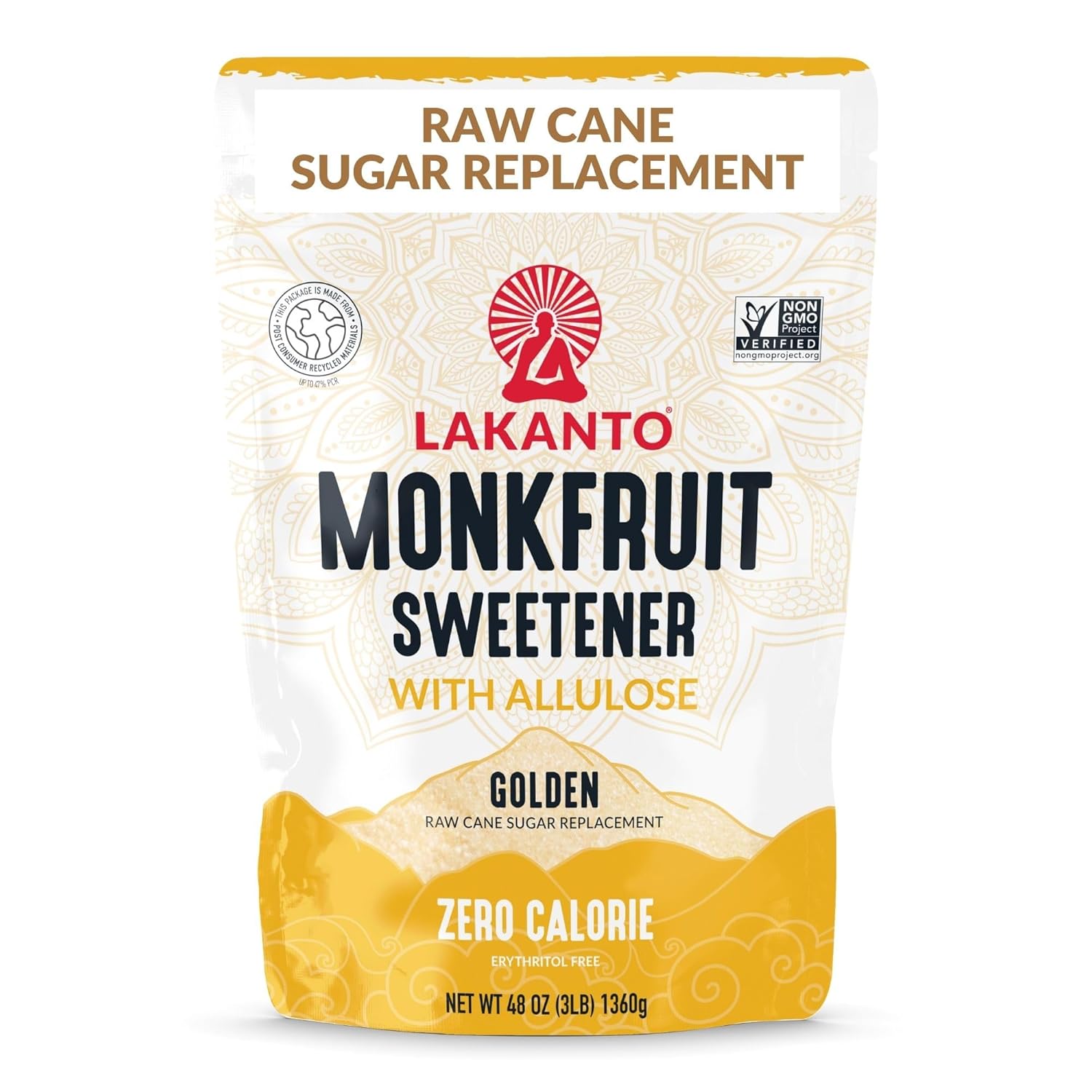 1 / 7
Prices are shown for browsing. Purchases are currently unavailable.
Lakanto Golden Monk Fruit Sweetener With Allulose Raw Cane Sugar Substitute From Monk Fruit Extract Raw Sugar Replacement, $55.98, Availability unknown. Image 1 of 7.
- Selected option
- Lakanto Golden Monk Fruit Sweetener With Allulose Raw Cane Sugar Substitute From Monk Fruit Extract Raw Sugar Replacement
- SKU
- JC6553
Source specifications
- Brand
- Lakanto
- Item Weight
- 3 Pounds
- Specialty
- All Natural Sweetener, Non GMO Verified, Raw Cane Sugar Replacement, Rawn Cane Sugar Alternative, Sugar Free See more
- Package Weight
- 1.37 Kilograms
- Product Benefits
- Blood Sugar Control, Dental Care, Diabetes Control, Metabolism Management, Weight Management
- Product Dimensions
- 8 x 3 x 12 inches; 3 Pounds
- UPC
- 843076004059
- Manufacturer
- Lakanto
- Units
- 48.0 Ounce
The details
About this item
Product description Previous page Next page 1 Tastes Like Sugar 2 Versatile Sweetener 3 Nutrition Facts 4 Lifestyle Friendly What is monk fruit? Monk fruit is a small green melon native to China and Thailand. Used for centuries in traditional medicine, it’s also zero-calorie sweetener. Its sweetness comes from mogrosides, which are much sweeter than sugar but don’t raise blood sugar levels. Who discovered monk fruit? Buddhist monks, have cultivated monk fruit for centuries, calling it "The Immortals Fruit" for its health benefits. Used to sweeten teas and elixirs, it was believed to boost energy and longevity. The FDA approved it as a sweetener in 2010. What are the benefits of monk fruit? Monk fruit sweetener is calorie-free, doesn’t raise blood sugar, and suits diabetics and low-carb diets. Its mogrosides are antioxidants that may reduce oxidative stress and inflammation. It ALLULOSE INFUSED SWEETNESS WITHOUT THE SUGAR: Lakanto Monkfruit Sweetener without erythritol is your next brown sugar substitute, offering a texture and taste remarkably similar to raw cane sugar without any calories. This sweetener dissolves quickly in liquids, keeps baked goods moist, and delivers the sweet
- ALLULOSE INFUSED SWEETNESS WITHOUT THE SUGAR: Lakanto Monkfruit Sweetener without erythritol is your next brown sugar substitute, offering a texture and taste remarkably similar to raw cane sugar without any calories. This sweetener dissolves quickly in liquids, keeps baked goods moist, and delivers the sweetness you crave, all in a convenient 3 lb bag.
From the manufacturer
Product details
Product description Previous page Next page 1 Tastes Like Sugar 2 Versatile Sweetener 3 Nutrition Facts 4 Lifestyle Friendly What is monk fruit? Monk fruit is a small green melon native to China and Thailand. Used for centuries in traditional medicine, it’s also zero-calorie sweetener. Its sweetness comes from mogrosides, which are much sweeter than sugar but don’t raise blood sugar levels. Who discovered monk fruit? Buddhist monks, have cultivated monk fruit for centuries, calling it "The Immortals Fruit" for its health benefits. Used to sweeten teas and elixirs, it was believed to boost energy and longevity. The FDA approved it as a sweetener in 2010. What are the benefits of monk fruit? Monk fruit sweetener is calorie-free, doesn’t raise blood sugar, and suits diabetics and low-carb diets. Its mogrosides are antioxidants that may reduce oxidative stress and inflammation. It supports gut health and may aid weight management. What's Allulose? Allulose is a rare sugar found in foods like figs, raisins, and maple syrup. It tastes like sugar, browns and caramelizes like it too, but has minimal calories and doesn’t raise blood sugar. Also known as D-psicose or pseudo-fructose. What are the benefits of allulose? Found in figs and maple syrup, allulose is a “nature-identical” sugar that doesn’t cause cavities or weight gain. It bakes, browns, and tastes like sugar—and
Highlights: ALLULOSE INFUSED SWEETNESS WITHOUT THE SUGAR: Lakanto Monkfruit Sweetener without erythritol is your next brown sugar substitute, offering a texture and taste remarkably similar to raw cane sugar without any calories. This sweetener dissolves quickly in liquids, keeps baked goods moist, and delivers the sweetness you crave, all in a convenient 3 lb bag.
Key details: Product Dimensions: 8 x 3 x 12 inches; 3 Pounds | UPC: 843076004059 | Units: 48.0 Ounce | Customer Reviews: 4.6 4.6 out of 5 stars (1,145)
How it fits your day: Use the key specs and highlights above to match it to your setup, space, or routine before you check out.
Customer feedback: 4.6/5 average rating.
Customers say: Customers love this sugar substitute for its taste and ability to make delicious desserts, noting it's the closest thing to regular sugar.
Review snippets: Lakanto Golden Monk Fruit Sweetener with Allulose is a fantastic alternative to traditional raw cane sugar for those seeking a healthier, low-calorie sweetener. Ideal for anyone looking to reduce sugar intake without sacrificing sweetness, this product blends monk fruit extract / The ultimate sugar substitute. Tastes 9 out of 10. With allulose and monk fruit this combo beats all in taste without that strange subtle aftertaste. Highly recommended. Game changer for me cutting back on sugar intake. Great in coffee, tea,
Product description Previous page Next page 1 Tastes Like Sugar 2 Versatile Sweetener 3 Nutrition Facts 4 Lifestyle Friendly What is monk fruit? Monk fruit is a small green melon native to China and Thailand. Used for centuries in traditional medicine, it’s also zero-calorie sweetener. Its sweetness comes from mogrosides, which are much sweeter than sugar but don’t raise blood sugar levels. Who discovered monk fruit? Buddhist monks, have cultivated monk fruit for centuries, calling it "The Immortals Fruit" for its health benefits. Used to sweeten teas and elixirs, it was believed to boost energy and longevity. The FDA approved it as a sweetener in 2010. What are the benefits of monk fruit? Monk fruit sweetener is calorie-free, doesn’t raise blood sugar, and suits diabetics and low-carb diets. Its mogrosides are antioxidants that may reduce oxidative stress and inflammation. It supports gut health and may aid weight management. What's Allulose? Allulose is a rare sugar found in foods like figs, raisins, and maple syrup. It tastes like sugar, browns and caramelizes like it too, but has minimal calories and doesn’t raise blood sugar. Also known as D-psicose or pseudo-fructose. What are the benefits of allulose? Found in figs and maple syrup, allulose is a “nature-identical” sugar that doesn’t cause cavities or weight gain. It bakes, browns, and tastes like sugar—and may even support fat loss and metabolic health, according to some studies. Previous page Next page Check Our Other Products Raw Sugar Substitute Buying Options White Sugar Substitute Add to Cart White Sugar Substitute Add to Cart White Sugar Substitute